


Eastman Guitars - The Story of a Remarkable Brand
The story of Eastman begins not with a guitar, but with a musician’s passion for high-quality stringed instruments. In 1992, Beijing-born flutist Qian Ni founded Eastman Strings after studying at the Boston University School of Music. What began as a small distribution company developed within just a few years into an internationally renowned manufacturer of handcrafted musical instruments. In the early days, Qian Ni personally transported the instruments in the trunk of his car, visiting music stores and violin makers throughout the United States.
From the outset, Ni was convinced that high-quality instruments should not necessarily be prohibitively expensive. In 1994, Eastman therefore began establishing its own master workshop for stringed instruments. The company looked to traditional European workshop structures for inspiration: experienced master craftsmen passed their knowledge on to younger instrument makers, while many processes are still carried out using traditional hand tools such as planes, carving knives, and chisels. This philosophy became the foundation of the entire Eastman brand.
The path to guitars ultimately emerged almost naturally from Eastman’s experience in violin making. Qian Ni recognized the similarities between hand-carved string instruments and historic archtop guitars. He was particularly fascinated by the work of renowned guitar makers such as John D’Angelico, Bob Benedetto, and John Monteleone. In 2002, Eastman presented its first archtop guitars at the NAMM Show. The response was extraordinary and marked a decisive turning point in the company’s history.
From that moment on, the guitar program continued to evolve. Following its archtops and mandolins, Eastman introduced its first steel-string acoustic guitars in 2008. In 2012, the company expanded its range with thinline electric guitars, followed by its first solidbody models in 2016. Drawing on its experience in traditional instrument making, Eastman developed into an exceptionally versatile guitar brand.
Throughout this evolution, Eastman has never abandoned its original philosophy. The instruments are crafted in the company’s workshops in Beijing by experienced instrument makers, with handwork and traditional construction techniques playing a central role. These include hand-carved components, individually voiced soundboards, and meticulously crafted bracing. Rather than focusing on maximum production speed, the emphasis is on the careful craftsmanship that goes into each individual instrument.
Today, Eastman offers an extensive range of acoustic guitars, archtops, electric guitars, mandolins, and other stringed instruments. Despite its international success, Qian Ni’s original vision remains clearly evident: to combine traditional craftsmanship with modern standards and create instruments that stand out through their tone, playability, and character.

All Eastman Acoustic Guitars
The handcrafted Eastman acoustic guitar combines unique design, precise craftsmanship, traditional construction techniques, and a carefully selected range of tonewoods. Every detail is thoughtfully chosen to create an instrument with exceptional character and tone.





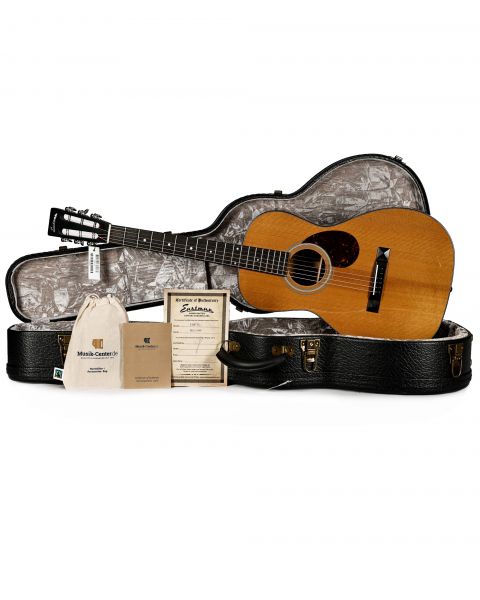
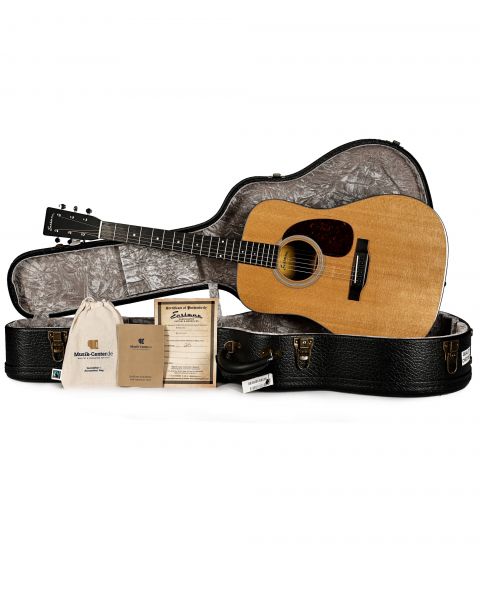

Professionally Set Up in Our Specialist Workshop
All Eastman guitars are fully set up in our specialist workshop before being carefully packaged and shipped. We adjust the neck relief and fine-tune the nut slots and saddle to ensure excellent playability. We are happy to tailor the setup of your Eastman guitar to your personal preferences. Simply get in touch with us after placing your order to discuss your preferred setup.
The Eastman Acoustic Guitar Series
Eastman Traditional Series
The Eastman Traditional Series is dedicated to acoustic guitars that consistently draw inspiration from the great classics of traditional guitar making. For this series, Eastman revisits proven construction methods and design concepts from the 1930s and 1940s, combining them with the precision of modern manufacturing. The result is a collection of instruments with an exceptionally authentic character and a tonal personality that immediately appeals to lovers of traditional acoustic guitars.
At the heart of the series is an open, dynamic, and balanced tone. The guitars respond exceptionally well to the player’s touch and reproduce even the finest nuances with impressive clarity. Whether powerful strumming, delicate fingerstyle, or classic accompaniment, the Traditional models offer a broad tonal range while giving the player plenty of room for personal expression.
What makes the series particularly appealing is the combination of traditional construction and modern manufacturing quality. Eastman’s goal is not simply to recreate historic instruments visually. Instead, the company reinterprets the classic concept using carefully selected tonewoods and an uncompromising approach to craftsmanship.
The Traditional Series is aimed at guitarists looking for a characterful acoustic guitar with a classic foundation. For anyone who loves the tone, aesthetics, and feel of traditional instruments, this series captures the spirit of historic guitar-making eras while offering the reliability of a modern instrument.
Eastman AC Series
With the Eastman AC Series, Eastman takes a more modern approach to building high-quality acoustic guitars. While the Traditional Series deliberately draws on historic construction methods, the AC Series focuses primarily on combining comfortable playability, versatile features, and the natural tone of an acoustic guitar.
A key feature of many models is the cutaway, which provides particularly comfortable access to the higher frets. This makes the series an excellent choice for guitarists who enjoy playing in the upper register without sacrificing the natural character of a full-sized acoustic guitar. Nearly all cutaway models are also equipped with an LR Baggs or Fishman pickup system.
Tonally, these instruments are balanced and versatile. They work exceptionally well as accompaniment guitars, offer plenty of dynamics for fingerstyle playing, and can be used just as effectively in the studio or on stage. This makes the AC Series an interesting choice for singer-songwriters, live musicians, session guitarists, and ambitious hobby players.
With this series, Eastman combines traditional craftsmanship with a contemporary concept. The guitars have a modern feel without losing their acoustic character. For anyone looking for a high-quality, versatile acoustic guitar that performs equally well unplugged and amplified, the AC Series offers an especially flexible selection.
Eastman Antique Varnish Series
The Eastman Antique Varnish Series is among the most distinctive instruments in the Eastman range. What sets it apart is the use of a hand-applied violin varnish, the same type of finish used on Eastman’s high-end string instruments. This gives the guitars not only a unique vintage appearance, but also a distinctive feel and their own tonal personality.
The finish is built up through an elaborate, multi-stage process. The thin varnish allows the wood to vibrate with exceptional freedom, supporting an open, resonant, and lively tone. At the same time, the surface creates the impression of an instrument that already has a long history behind it.
The Antique Varnish Series encompasses a variety of instrument types, making it far more versatile than a dedicated acoustic guitar series. Alongside acoustic guitars, the concept also includes archtops, thinline models, solidbody guitars, and mandolins.
What makes the series particularly appealing is the combination of traditional handcraftsmanship, vintage character, and modern manufacturing quality. Each finish has its own individual appearance, making every instrument truly unique.
For anyone looking for a guitar that doesn’t simply look like a brand-new production instrument, but already conveys a sense of personality from the very first touch, the Antique Varnish models are especially compelling. Here, classic aesthetics, natural resonance, and meticulous handcraftsmanship come together.
The Roots in String Instrument Making
Eastman was not originally solely a guitar manufacturer. The company’s history began with the production of stringed instruments. In 1992, Qian Ni founded Eastman Strings with the goal of developing high-quality instruments that combine traditional craftsmanship with modern manufacturing capabilities. These roots continue to shape Eastman today and have a profound influence on the philosophy behind its guitars.
The company’s experience in string instrument making is particularly evident in the selection and treatment of tonewoods, the finishing process, and the craftsmanship involved in building each instrument. Many details are executed with great care, with the instrument’s natural resonance and response always taking center stage. The Antique Varnish finishes, in particular, draw on traditional expertise from string instrument making, giving selected Eastman instruments their distinctive appearance and tactile character.
From these beginnings, Eastman developed into a brand with an extensive range of acoustic guitars, archtops, solidbody guitars, mandolins, and other instruments. The company has never abandoned its original connection to traditional instrument making. Instead, Eastman combines classic craftsmanship, modern construction methods, and decades of experience to create instruments with a particular focus on tone, resonance, and playability.
Eastman and Dana Bourgeois: Boutique Guitar Making Meets Eastman Craftsmanship
The connection between Eastman and renowned guitar maker Dana Bourgeois is a great example of how Eastman combines traditional guitar-making craftsmanship with modern ideas. Bourgeois is one of the best-known names in high-end acoustic guitar making and has built a reputation over many years for exceptionally well-crafted and meticulously voiced instruments.
This expertise can also be found in selected Eastman models. Certain instruments, for example, feature the Tone Tite Neck System developed by Dana Bourgeois. The design aims to create an exceptionally efficient connection between the neck and body, allowing for direct vibration transfer while providing a high level of stability.
The result is a construction concept that combines structural stability with efficient resonance and response.
There is also a special connection when it comes to the finishing process. On selected models, Eastman uses a Truetone finish based on a lacquer formula that is also used on Bourgeois guitars. The focus here is not purely on aesthetics. A finish that is as thin and carefully applied as possible can help preserve the natural vibration of the wood and give the instrument an open, lively response.
What makes this collaboration particularly interesting is the combination of two distinct strengths. On one side is Dana Bourgeois’ experience in high-end boutique guitar making; on the other is Eastman’s extensive manufacturing experience and exceptional craftsmanship.
For the musician, this means one thing above all: selected Eastman models benefit from thoughtfully developed construction concepts and a uncompromising focus on tone, resonance, and playability. It is this combination of traditional handcraftsmanship, modern development, and the expertise of renowned guitar makers that gives many Eastman instruments their distinctive character.
Eastman demonstrates that high-quality guitars do not necessarily have to come from a small boutique workshop. By collaborating with experienced guitar makers such as Dana Bourgeois, the company brings together sophisticated construction concepts, traditional craftsmanship, and modern manufacturing.